
Three Shocking Stories from Treatment That Inspired My Writing
There was a time I thought treatment would simply be a death sentence. I've never been more intrigued by my surroundings as much as then.
Many people can claim they've rode in a vehicle for hundreds of miles, but few can share how much time they spent being transported to institutions .
Personally, I can say I've spent far more time in a vehicle's backseat with shackles on then I'd like to admit. But here I am, recalling the most intimate details of my time receiving treatment in Maryland's psychiatric institutions. The whole point of it all was to improve my mental health, restore me to safety, and quite possibly, gain as much distance from the place I called home as possible..
Still, decades later, I'm wondering why I haven't forgotten all of the memories.
There were times of fun and times of sadness. Times of sickness and times of celebration. But few experiences were as memorable as the stories I'm about to share. Keep reading to hear about some of my most remarkable memories from court-ordered treatment.
1. We Laugh When Storms Cry
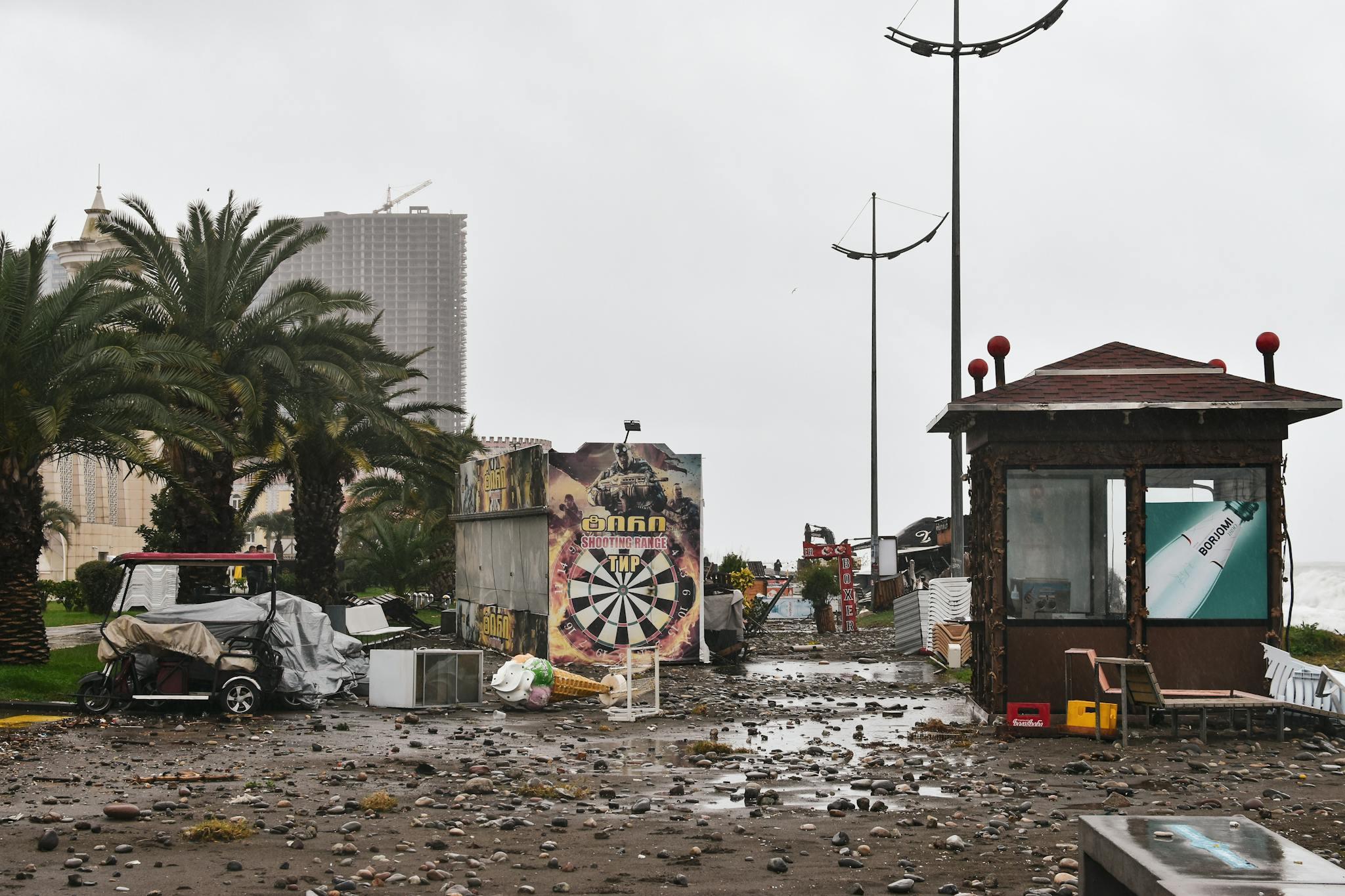
Back in 2003, when President Bush was fighting to gain support for the War, Hurricane Isabel formed off the West African coast, making landfall near Drum Inlet, North Carolina within days. The storm arrived in Ellicott City, Maryland with gusts of wind recorded at 75 miles per hour. Trees fell, power lines dropped, and two dozen teens and I sat in a circle in a day room at a Sheppard Pratt treatment center, our attention fixed on one of our favorite counselors.
We listened, hoping that the joke that Mr. Derek was telling was worth the anticipation. No one wanted to admit how worried we were, but being distracted kept our hyperactivity at bay. With the streets turning into mush, the punchline came—“fifty cent, fifty cent, fifty cent!” We howled, roaring in fits, enjoying ourselves as if we were seated by a campfire.
In an adolescent RTC, the atmosphere varies. At times, the mood is tense. That evening, in a facility illuminated by emergency lights and lanterns, I knew that Isabel would one day inspire my writing, if not for its uniqueness, then for the thrills and excitement. After all, nothing is more intriguing than living through a storm, especially while another one brewed in my mind.
Most of the time over those several days, I avoided the day room. Even with my Coke bottle lenses, I couldn't see very well in the dark. That said, I drifted to my room, which was pitch black, as frequently as I could. There, I paced about while the headphones to my Walkman blasted 90s rap music in my ears.
While the storm raged on. I dreamed. I dreamed of everything. About hopes, about danger, about writing, about school. I dreamed of the girlfriend I had when I arrived and the couple of relationships that fell apart over the months. But more than anything. I dreamed that one day I'd be okay. Those dreams, I knew, would keep me alive one day should my life truly get worse.
There was something about being confined while being trapped in Isabelle that made me happy. Here I was, young and hopeful, while other kids lived normally. But me,. all I could do that week was desperately avoid the staff's warnings. They'd check in on me. Repeatedly. Warn ,me, saying, "Kevin's it's not safe." Indeed, it's a wonder I didn't trip over my own feet and split my head on a dresser in my isolation.
The storm ended without me ever hearing a word from my family. I never talked about it with anyone because I felt an odd sense of comfort among the madness. Knowing there were adults that were trained to keep me safe without judgment made me respect them more than ever after Isabel. In retrospect, I wonder what it was like for other kids in other facilities. Who knows, maybe they had it bad.
For me, the experience was a big reason today I write about mental health. Writing gives me the chance to engage my readers., not only with informative, researched articles but with vivid, compelling, suspenseful storytelling. The Category 5 hurricane may have torn apart Maryland, but it taught me the importance of highlighting the risks of living and working in institutions. As far as I can tell, that's a risk that’s amplified when nature strikes with a vengeance.
2. A Dog Stopped a Riot
A state mental hospital must be kept secure. Escape attempts occur. Aggression gets out of hand. Sometimes, a ruckus will make the local newspaper. The staff must be privy to signs something is amiss. If not, all can break loose without warning.
Safety was the reason why Crownsville State Hospital once went haywire. The mayhem occurred weeks after my abrupt departure from an Upper Marlboro RTC. I was lying on my bed, drifting off to sleep, trying to ignore one of my roommates who couldn’t keep away from the door. Within minutes, I knew why. A commotion was taking place a few feet from the dorm room where my roommates and I stayed.
“Eight o’ clock,” a guy named Cody said to anyone who was listening. "At eight o’ clock, I’m going hard. I’m hitting staff in the face with this.”
He held up his hand, and I could see he was holding a sock, presumably filled with a bar of soap. The reality of what was about to unfold soon dawned on me. I heard loud banging noises in the adjacent dorm room. An image formed in my head—of teen boys, kicking a closed door, repeatedly. Then what sounded like room furniture—desks and chairs—being tossed at the door.
The staff quickly began locking us in our rooms. Within a half an hour, the entire ward was filled with personnel. Security guards, staff members from other units. The place was a jungle of anger while many of us slept silently.
Turned out, the unthinkable was happening. The boys were rioting, flipping out, and the level of aggressiveness was too much for the staff to handle alone. Soon, the police arrived, accompanied by a dog. I heard barking and yelling, followed by stern commands.
“Get against the wall!” shouted one of the Sherrifs' deputies.
The answer—a resounding, "No!”
“You want the dog on you!”
Another no.
I heard more thumping and banging sounds, as if someone was being beat. The sounds went on for a while and were followed by an occasional, “Bucky, no!” Bucky, apparently, was the name of the Sherrifs' department’s police dog. He was there to save the night, possibly, by any means necessary.
Bucky’s barking was noticeably distinct. High-pitched, like yapping, but mixed with mean growls. I heard more beating noises, and what sounded like resistance. Then, handcuffs clasping wrists.
Later, one of my roommates, Raoul, was shouting excitedly by the caged window, exclaiming that the three boys involved could be seen outside in the lot. I never saw any of the boys, but Bucky was unmistakable. A tiny brown dog being escorted on a leash. A chihuahua, not exactly what you’d have in mind for such an ordeal. I could only imagine the consequences the teens had been dealt. But the means the cops used to establish control was humorous at the least.
The next morning, most of us were confused. One girl asked what the heck had happened. The story was quickly revealed. The boys were subdued, taken to police headquarters, and charged. Cody returned to the facility wearing brown leather shackles. I never saw him back at Crownsville again, but the memory of that night’s horror will be forever etched in my memory.
Over a decade later, I refocused my writing. I knew it was critical to point out the desperation that people with behavioral problems feel. By describing shocking details and symptoms with intimate detail, I’d become capable of showing people what it’s like to live in such peril.
3. The Great Ice Cream Bribery
In psychiatric facilities, few incidents are more concerning than the disappearance of a staff member’s keys. Keys open doors to exits, sensitive information, and equipment. When a staff member’s keys are lost, the ward is locked down, and everyone, myself included, is subject to scrutiny and invasion.
One afternoon, at Crownsville State Hospital, such an incident occurred that prompted an immediate reaction. The librarian, someone we all liked, became aware that the keys she kept on her person were no longer around. We never heard her report, but an announcement was made. We were to return to our rooms immediately and stay there until further notice.
What happened next was proof that patients in a psychiatric facility barely have any rights, and when they do, those rights can be relinquished should safety become an issue.
Like always, us teens with behavioral problems were told what to do. One by one, we would be taken to a nursing room where we would be subjected to searches. Only when it was my turn did I realize what kind of searches would take place.
I entered the room with my heart beating fast. Two staff members were within arm’s length of me. One was a certified nursing assistant—at that facility, they were called psych techs. The other was a director, a top boss. His name was Mr. Taylor. We were packed into the tiny room and there was no means of resistance. In a hurry, I said, “I’ll do whatever you need me to do, sir.”
A moment later, the shocking reply. “Alright, strip,” Mr. Taylor said.
Back then, I was a sad, frightened, and incredibly insecure teenage boy who did virtually anything he was told regardless of whether the request was questionable or downright insane. Without hesitation, I gingerly removed my clothes, stripping down to my underwear and standing humiliated while my clothing was searched.
In retrospect, the experience could have gone far, far worse. Still, hours passed. Rooms were searched. Our personal property was searched. Some of us were stripped repeatedly.
Later, the psych techs took us to a bigger room on a separate unit. We sat in seats in front of long beige tables. On another table were paper bowls and cups, and packages of ice cream lined up in a row. We waited. Then, the librarian entered the room, offering one of the most heartfelt apologies I’d ever heard. For all the pain we’d endured, the keys had been discovered—somewhere.
I’ll never know where the keys had been found. There was a report that the keys had been inadvertently lodged deeper within the librarian’s locked desk. All that mattered was that we were treated to a delicious treat of ice cream with toppings like chocolate and caramel syrup. Given the quality of the food in state psychiatric institutions, I’ll say the moment was special to say the least.
Years later, I learned from the experience. Everything is not always as it seems, and even staff members who are stern can prove to have soft hearts. Amid heartbreaking measures, the sincerest show compassion. As a writer, I’m responsible for shedding light on these experiences. No matter how unpleasant, our stories needed to be told.
Kevin Brown writes on mental health, addiction, and self-improvement. He lives in Maryland.
Post a comment