
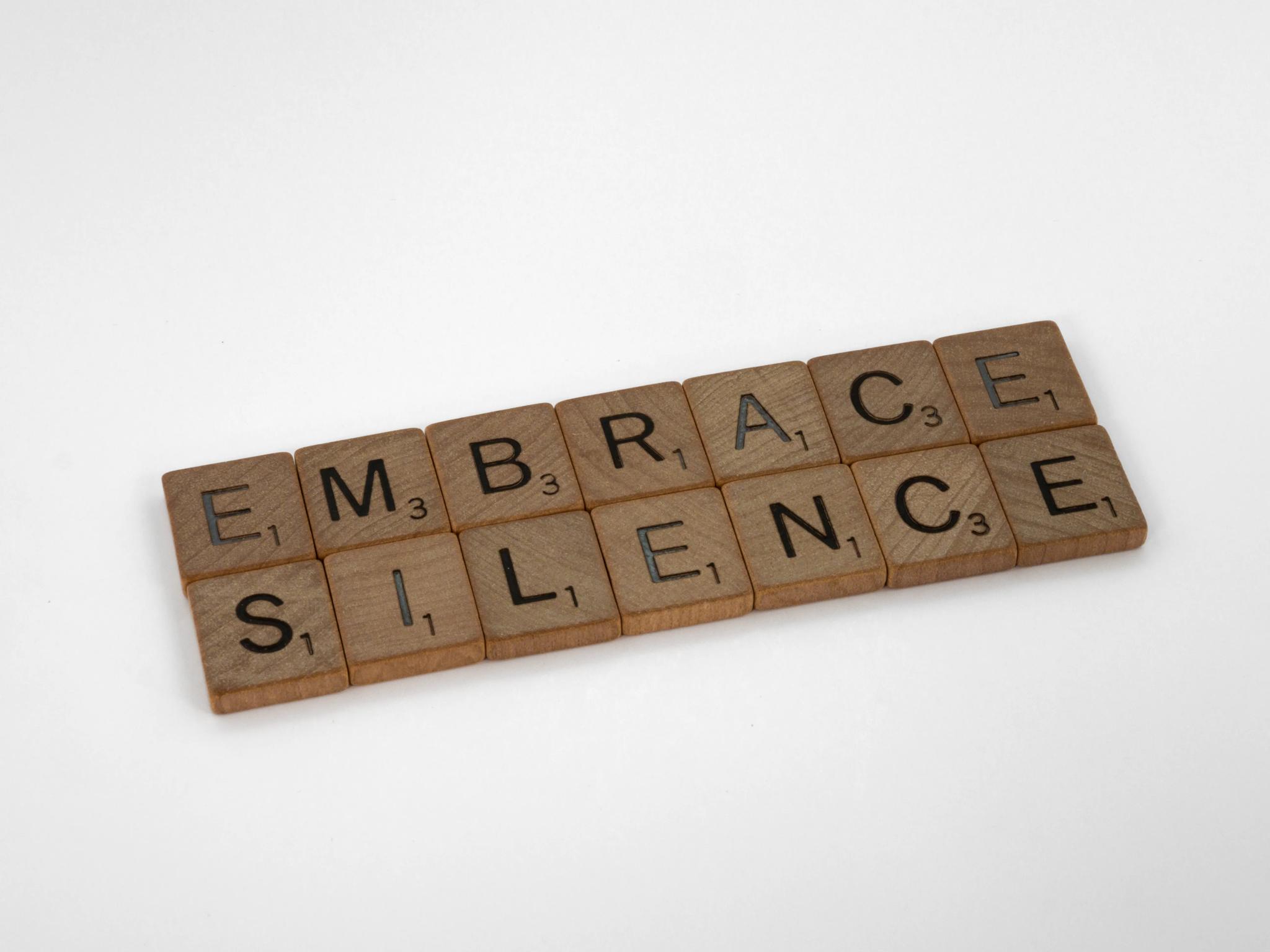
Why Being Silent in Therapy Isn't a Bad Idea
Depending on your purpose for attending therapy, you may find yourself met with an awkward silence that extends for ten minutes or longer or occurs repeatedly in a session. Likely, what you're going through is a process of discovery that stirs up emotions that cause you to pause.
The strongest emotion you'll feel is probably fear. The fear may be intense and recognizable, or passive and hiding beneath the surface. While most of us can casually talk to a therapist, fear keeps many of our lips sealed.
What's happening is normal. You shouldn't be ashamed. The number of fears related to therapy is so high that trying to open up too fast could likely do you more harm than good. In a previous post, I addressed overcoming fear of therapy, but this time, I'll teach you something different.
Instead of pushing you to push past your fear and open up, I'll teach you why dodging your therapist's questions is beneficial for you. The truth you need to remember is that in therapy, silence is empowering. Silence gives you a chance to do better.
- Silence empowers you to break down emotions
- Silence empowers you to overcome fear
- Silence empowers you to self-reflect
- Silence empowers you to know yourself better
Being quiet in therapy gives you a chance to be your best. Let me explain why being silent in therapy helps.
Silence empowers you to break down complex emotions
Much of the growth that silence causes comes from your ability to navigate, challenge, and re-analyze complex emotions which typically take a longer time to understand. What this means is that if your therapist asks you a question that stirs up emotions, an immediate answer might not address how you feel.
Now imagine repeated sessions where your blurt out rapid responses. Naturally, you'd be less likely to have fully processed your emotions, especially those that create discomfort, such as sadness or jealousy. Since emotions can't always be processed in the space of an hour, you'll need even more time to allow your brain to keep working, so your mind continues to attach meaning to your emotions.
This means that by the time the session is underway, your responses will become gradually more rewarding. Even if the impact isn't noticeable for weeks. Since most therapists prefer you to carefully explore, silence gives you a chance to mind the process.
Silence empowers you to overcome fear
There's a ton of things you can fear about therapy at any point. Identifying these fears will help you accept that they're normal.
- There is fear of rejection
- There is fear of judgment
- There is fear of change
- There is fear of hard work
- There is fear of shame
- There is fear of abandonment
- There is fear of disappointment
- There is fear of losing control
Frankly, therapy is frightening!
But wait just a moment.
In fact, wait as long as you need.
What if you waited long enough to allow the fear to resolve? Wouldn't some quiet time enable you to rest your nerves?
Therapy is a safe place to tackle your fears. Even better, it's a place where you can take as long as you need. Fear is most frightening at the peak of intensity, which is typically early on given that the body's Fight-or-Flight response kicks in as soon as you're triggered. This is why your therapist or counselor would recommend that you take your time.
Remember, we're human, and quickly sharing intimate details of personal experiences is sure to feel terrifying. Ultimately, the fear is a normal part of therapy and will likely die down the more time you're quietly relaxed.
And there's a bonus, too. After silence helps you overcome fear, one day you'll be opening up more and seeing the results of your dedication. Moments like those are always great for future reflection. These become moments to think about how far you've came.
My story sets a strong example. As a teen, therapy was hard. At least, initially. But I broke through my fears. One week at a time. I learned that you must always take advantage of an opportunity. Especially opportunities to overcome your fears.
Now, take one moment. Think again of that long list of fears. Knowing that silence sets the path to overcoming your fear, what happens in the brain to jumpstart that process?
Naturally, a ton of activity is occurring. Your fear and your silence are making your brain busy.
Silence empowers you to self-reflect
Since we're discussing fear, trust that you shouldn't have to fear your thought processes. Naturally, a little mind-wandering will occur when you're quiet for long periods of time. Eventually, your mind will latch onto meaning, giving you the spark you need to perk up and speak.
The magic all comes down to some work happening in your brain. Inside your head, there is a system of brain regions that are responsible for self-reflection, memory recollection, and yes, those moments of intensely imaginative daydreaming. There is the premedial prefrontal cortex that sits between the two hemispheres that's responsible for emotional regulation. And there is the hippocampus, the seahorse-shaped part of the brain associated with learning. Together, these brain structures help you attach meaning to memories while working to form context in your mind.
The entire point of this lesson is to understand that forming context takes patience. With patience comes heightened self-awareness.
Think of this way. The longer you're quiet, the longer you'll examine yourself in response to your therapist's questions. For that reason, it's worth taking the time you need, at least for the purpose of better understanding who you are.
Know yourself better
One way or another, silence is empowering. Silence empowers you to reflect and feel while reducing anxiety enough for you to overcome fear.
Entering therapy, you'll always have fear. But most of what you fear comes from the anxiety that occurs during a process of self-discovery and acceptance.
For this reason, you're safe trusting that time will give you the gift of self-awareness, which is well worth the time you spend silent in therapy. Trust that going forward, you'll feel more confident in your expression. Either way, growth will occur whether you're quiet or talkative.
How do you think silence in therapy helps you feel safe?
0 Comments Add a Comment?